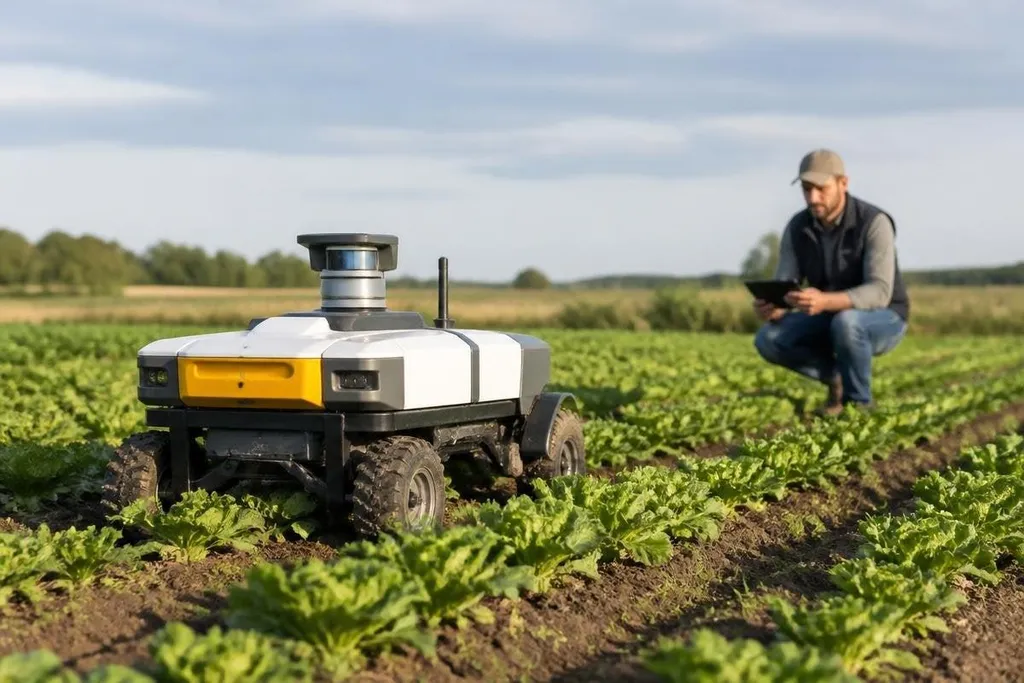
A farm robot may spot weeds, carry loads, monitor crops, or pick produce. Its value depends on one basic question: can it do a repeat task safely and reliably in that field?
For a grower weighing automation, the main trade is clear. Robots can reduce some manual work and collect more field data, but they also bring costs, maintenance needs, and new safety risks.
- Robots suit repeat tasks with clear limits, such as row travel or crop checks.
- Cameras and sensors can guide action, but dirt, rain, leaves, and uneven ground affect results.
- A purchase only makes sense when the saved work outweighs the robot’s price and upkeep.
Where robots help
Agricultural robots work best when the task follows a repeat pattern. A machine can move along crop rows, inspect plants with cameras, remove weeds, carry materials, or gather field readings without asking a person to repeat the same motion for hours.
That repeat work matters because farms often face labor shortages during short planting, thinning, and harvest windows. That machine may let a small crew cover more ground, but only if it keeps running during the hours when work is available.
Some systems use computer vision, which means software studies camera images to identify plants, weeds, fruit, or gaps in a row. The system can then guide a tool toward a target instead of treating the whole field in the same way.
The benefit depends on the crop and the task. Row crops give a robot clearer paths than a field with uneven spacing, fallen plants, or dense foliage. Fruit picking can be harder because the machine must find ripe produce without damaging nearby fruit or branches.
Where the risks start
Outdoor work is hard on machines. Mud can block wheels, dust can cover cameras, and rain can change how a robot sees the ground. Uneven soil also raises the chance of a wheel losing contact or a tool missing its target.
A farm still needs a person who can check the robot, clear a blockage, repair a part, and decide when conditions have changed. That support work can reduce the labor savings if the machine needs frequent attention or a trained operator must stay nearby.
Safety needs its own plan. Any robot sharing space with workers, tractors, livestock, or visitors needs clear movement limits, emergency stops, warning signals, and rules for servicing the machine. Autonomous movement does not remove the need for supervision.
Data creates another concern. Cameras and field sensors can record crop conditions, machine routes, and farm activity. Before buying, ask where that data goes, who can access it, and whether the system still works if the internet connection fails.
A farm robot can look affordable until you add setup, repairs, staff time, and network service. Robot24.com reports on the companies and machines behind agricultural automation, so you can compare a claimed saving with the work and costs that remain. That leads to the next question: what does the robot cost after purchase?
The cost beyond the price tag
The purchase price is only one part of the decision. You may also need charging equipment, spare parts, software fees, storage, training, and changes to field layouts. A machine that needs a special route or docking area can add work before it saves any.
The right comparison is the cost of the task today against the full cost of running the robot. Count the hours a worker spends on that job, the weeks when demand peaks, and the time someone must spend checking the machine.
Include lost work when rain or a blocked tool stops the robot.
I’d skip an agricultural robot if the seller cannot show how it handles ordinary field problems, not only a clean demonstration plot.
A buying checklist
Use these checks before you sign a purchase order:
- Name the task: Write down the exact job, crop, field size, and working hours.
- Watch ordinary runs: Ask to see the robot work on uneven ground, around plants, and after light rain if those conditions matter on your farm.
- Check human work: Find out who clears faults, loads supplies, repairs the machine, and watches it during operation.
- Read the data terms: Confirm what the cameras record, where files are stored, and how the farm can get its data back.
- Price the downtime: Add service visits, spare parts, charging, software, and days when the robot cannot work.
One that handles a narrow job well may be easier to run than a machine built to cover many tasks. Start with the work that repeats often and has a clear measure, such as rows inspected, weeds removed, or loads moved.
Agricultural robots will earn a place on more farms when they show steady work in ordinary conditions, with repair plans and costs that growers can check before buying. Until then, treat a field trial as a test of the whole system, not proof that the robot can run every season.